
Inside Honolulu County Most Wanted
HPD decides what the public sees. The HPD Wanted Persons and Na Maka page is Honolulu County's official channel for these requests, and it is exactly that: a request for help, not a searchable inventory of every open warrant. Which cases get publicized is the department's choice. The page can steer a witness to the right place, but it cannot tell you whether a specific person has a current warrant. Names, photographs, allegations, mugshots, and profiles stay with the agency, which can revise or remove them. That matters. After an arrest, a surrender, a recall, or other court action changes things, a stale copy circulating elsewhere would only mislead people.
Honolulu County Na Maka Portal
The program belongs to HPD, and the official page is where Honolulu County residents should get their information about it. Copied social posts and third-party databases are poor substitutes. Neither HPD nor the Sheriff Division publishes a complete public active-warrant roster. The official HPD program page explains how the tip program itself works.
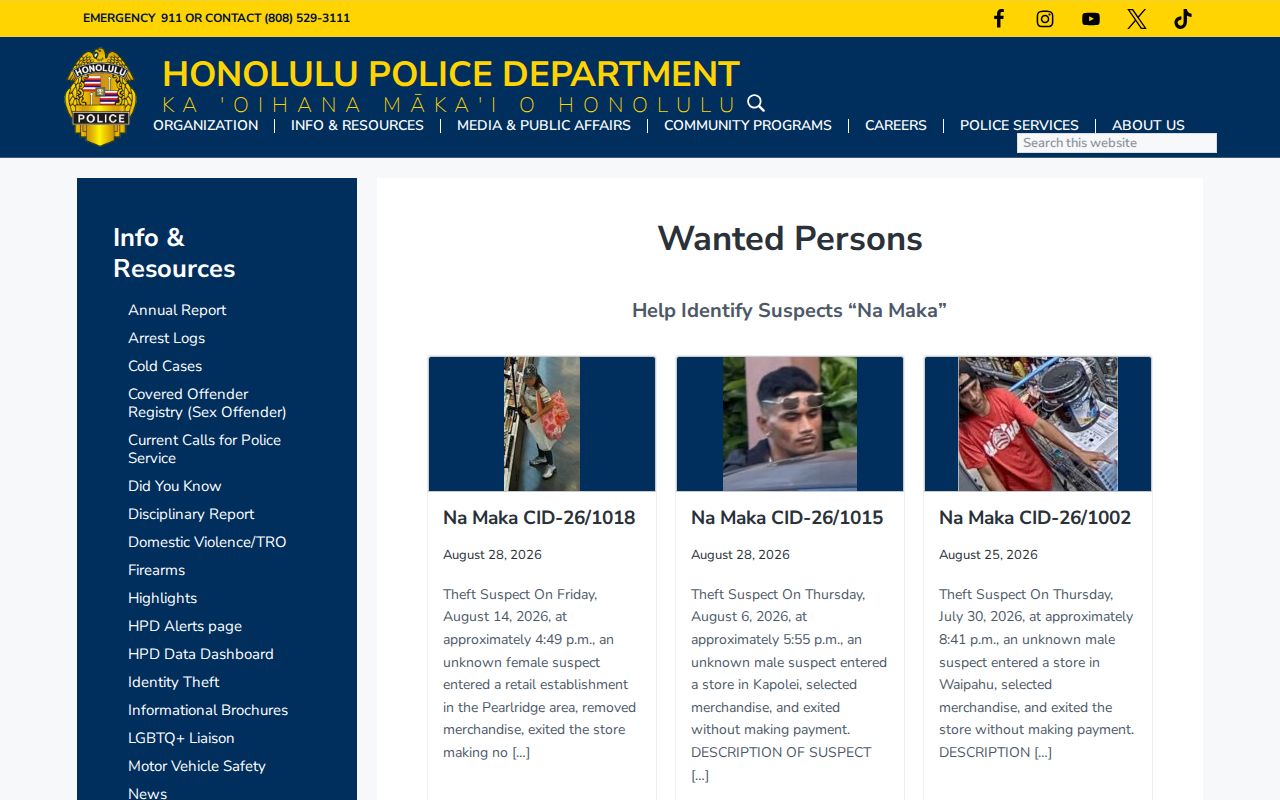
That official page is the right destination for current Honolulu County program details. It still is not confirmation. Only the issuing court, HPD Records and Identification, or the Sheriff Division can settle a warrant question.
How Honolulu County Most Wanted Lists Work
A most-wanted bulletin is curated, plain and simple. The agency picks which request to publish, while the underlying warrant stays under its issuing authority's control. HPD does not call Na Maka a full active-warrant list and posts no public update schedule for all warrants. A bulletin can change once a person is found or the legal status shifts. Absence means very little. Most active warrants never appear in one. Sealed, juvenile, confidential, and investigative material may simply be unavailable. Checking your own case? Start with eCourt Kōkua, then ask the First Circuit clerk or the HPD Warrants Unit what they can confirm. Note: A wanted-person post is a public-assistance request, not a permanent statement of Honolulu County warrant status.
Honolulu County Tips Versus Checks
Two different needs, two different doors. A witness who knows a location or an event should call CrimeStoppers. A person checking on a personal Honolulu County warrant goes to the court file, the clerk, HPD Records and Identification, or the Hawaiʻi Department of Law Enforcement Sheriff Division instead.
| Need | Official channel | Role |
|---|---|---|
| Give public-safety facts | Honolulu CrimeStoppers | Accept an anonymous tip |
| Read a state case | eCourt Kōkua | Show public events and documents |
| Ask about HPD records | HPD Warrants Unit | Explain releasable information |
| Ask about service | DLE Sheriff Division | Route a court-process question |
CrimeStoppers cannot negotiate a recall, set a hearing, or privately confirm anyone's status. Court action belongs to the issuing court in Honolulu County.
Sending a Most Wanted Tip Safely
The Hawaiʻi Attorney General CrimeStoppers page names Honolulu CrimeStoppers as the official partner. It lists an anonymous hotline at (808) 955-8300, a web-tip route, and rewards up to $1,000 under program terms. Remember what this is. A tip system, not a private warrant-check service. The state program view lays out the anonymous process itself.
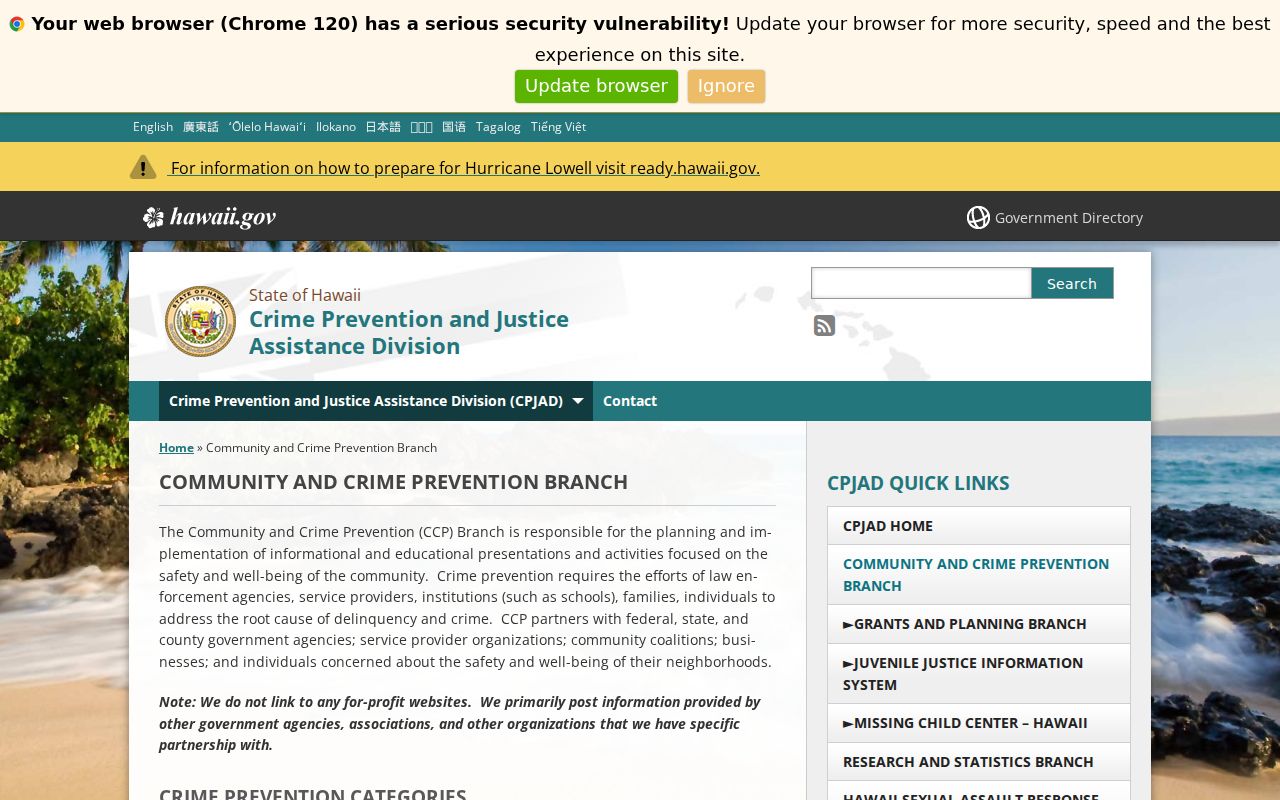
Before you send a tip, check the current program rules on Honolulu County's official source.
- Use the official hotline or Honolulu CrimeStoppers web route.
- Give clear facts about the event or location.
- Keep the tip number that the program provides.
- Use that number for follow-up under reward rules.
Key point: Report useful facts, step away, and let trained officers assess and act on the information.
Honolulu County Anonymous Reward Rules
An anonymous tip and a reward are related but not identical promises. The Attorney General describes rewards of up to $1,000. "Up to" is the key phrase; the amount depends on review and program terms, so a tip is not automatically payable. The official Honolulu CrimeStoppers interface shows how the program route works.
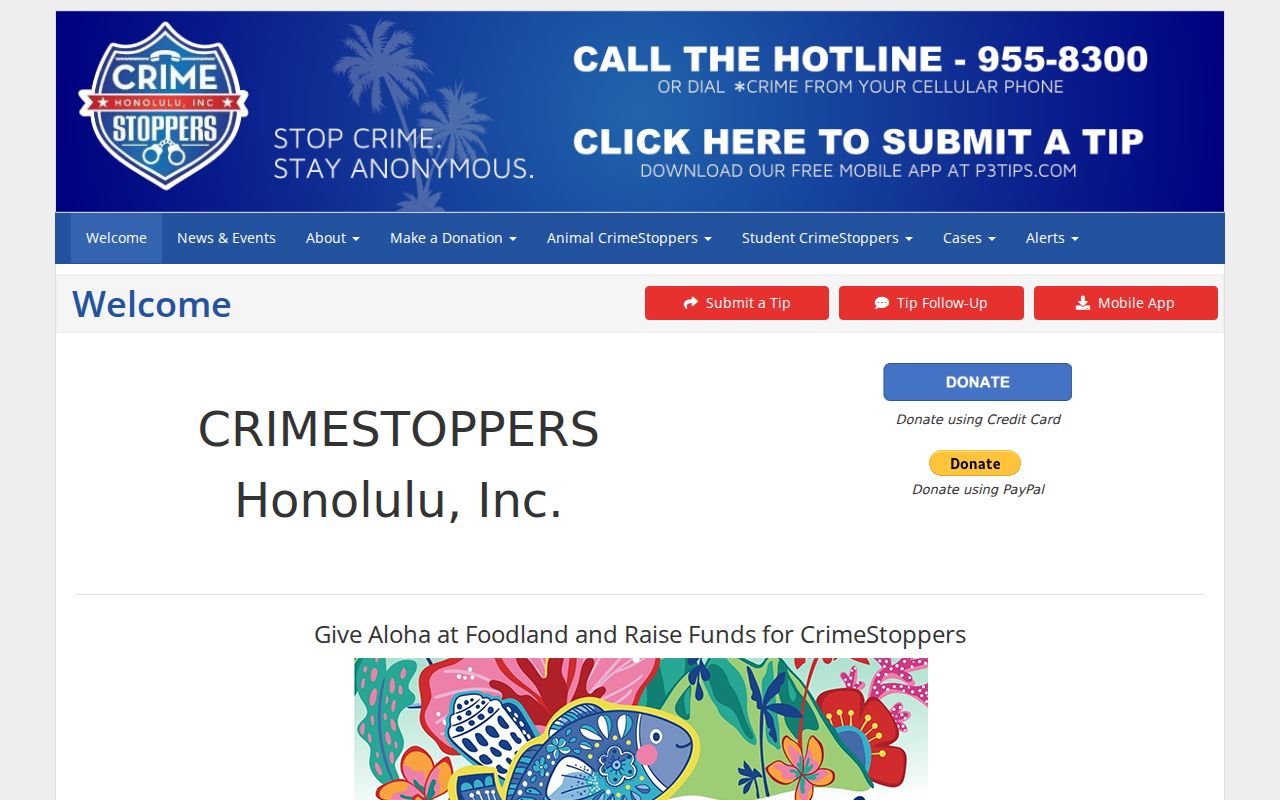
Guard the code Honolulu County Crime Stoppers issues you. That code keeps you anonymous during follow-up, while the program alone decides eligibility and any reward.
How Most Wanted Differs From an Active Warrant
A Honolulu County most wanted bulletin is a chosen public notice. An active warrant, by contrast, is live legal process the court has not yet recalled, canceled, executed, served, or resolved. A warrant can exist with no bulletin at all, and even eCourt tracks case information rather than confirming every police warrant.
| Feature | Most wanted program | Active warrant |
|---|---|---|
| Scope | Selected assistance matters | Case-specific legal process |
| Public source | HPD Na Maka | eCourt, clerk, HPD, or sheriff |
| Purpose | Receive tips | Authorize official action |
| Status | Not full confirmation | Verify with responsible agency |
The Honolulu County active warrant search details why an online absence is not clearance.
Honolulu County Scam Signals
Scammers feed on fear of arrest. In June 2026, HPD warned about callers claiming missed jury duty produced an active warrant, then demanding money or personal data. Treat any caller's number, payment link, kiosk instruction, or warrant number as unproven. Hang up and call the agency yourself. The Hawaiʻi Judiciary scam guidance rejects demands for gift cards, wire transfers, cryptocurrency, Cash App, or Venmo. And Honolulu County's real tip program never charges a tipster to share information.
Verify first: End the call and use the number published by the court, HPD, or CrimeStoppers.
Honolulu County Program Boundaries
The wanted-person program gives the Honolulu County police one thing: tips. It gives the public nothing else. Seeing a bulletin does not authorize you to stop, follow, question, or detain anyone. Bulletins also age. A person who resembles the description may be someone else entirely. Pass what you saw through the official channel and let HPD decide what response is lawful and safe.
A public notice is not a court file, either. A Honolulu County wanted notice asks for help, while the court record behind it can hold a complaint, an order, a warrant entry, a seal, a return of service, or a later disposition. Only part of that ever reaches a bulletin. The authoritative answer on Honolulu County warrant status sits with the issuing court and its authorized confirmation systems.
Wondering about a family member's possible warrant? Use the same path you would for your own case. Search a known case number, call the clerk, and consider counsel. CrimeStoppers is the wrong door for a private status question, because that line exists to collect facts bearing on public safety. These boundaries help everyone. Tip staff get useful information, legal questions reach the court that can actually answer them, and no unofficial copy lingers once the agency changes its request.
When You Believe You Are Listed
Do not phone CrimeStoppers to ask whether you have a warrant. Talk to a lawyer first, then the issuing court. A public eCourt entry may show a case event, but HPD policy has officers verify warrants through authorized systems, so only the responsible office can speak to live status. Honolulu County offices answer those calls directly. HPD Records and Identification lists the Warrants contact at (808) 723-3258. The DLE Sheriff Division lists Oʻahu at (808) 587-5002, Circuit Court Sheriff at (808) 539-4599, and District Court Sheriff at (808) 538-5696. Ask each office whether it holds the record and what proof of identity or authority it needs from you.
Important: Speak with counsel before arranging an appearance or surrender, and never approach another listed person.
A recall, cancellation, execution, or new date must appear in the official Honolulu County court record. Deleting a post proves nothing.