
How Traffic Warrants Work in Honolulu County
A traffic citation in Honolulu County opens a state court case. Most infractions just need payment or a response within 21 days. Traffic crimes are different, since they require an appearance. Skip a required court date and the District Court traffic division can issue a bench warrant under HRS section 291D-12. Hawaiʻi offices call this a traffic warrant or bench warrant, never a capias. The warrant is its own order, separate from the ticket and from any default judgment, and it authorizes arrest. The clerk's docket shows whether it stays open, was recalled, or has been served. Paying through some other channel does not by itself prove a judge withdrew it.
Honolulu County Traffic Warrant Timeline
The Judiciary traffic-cases page explains the response deadline, payment choices, and limits.
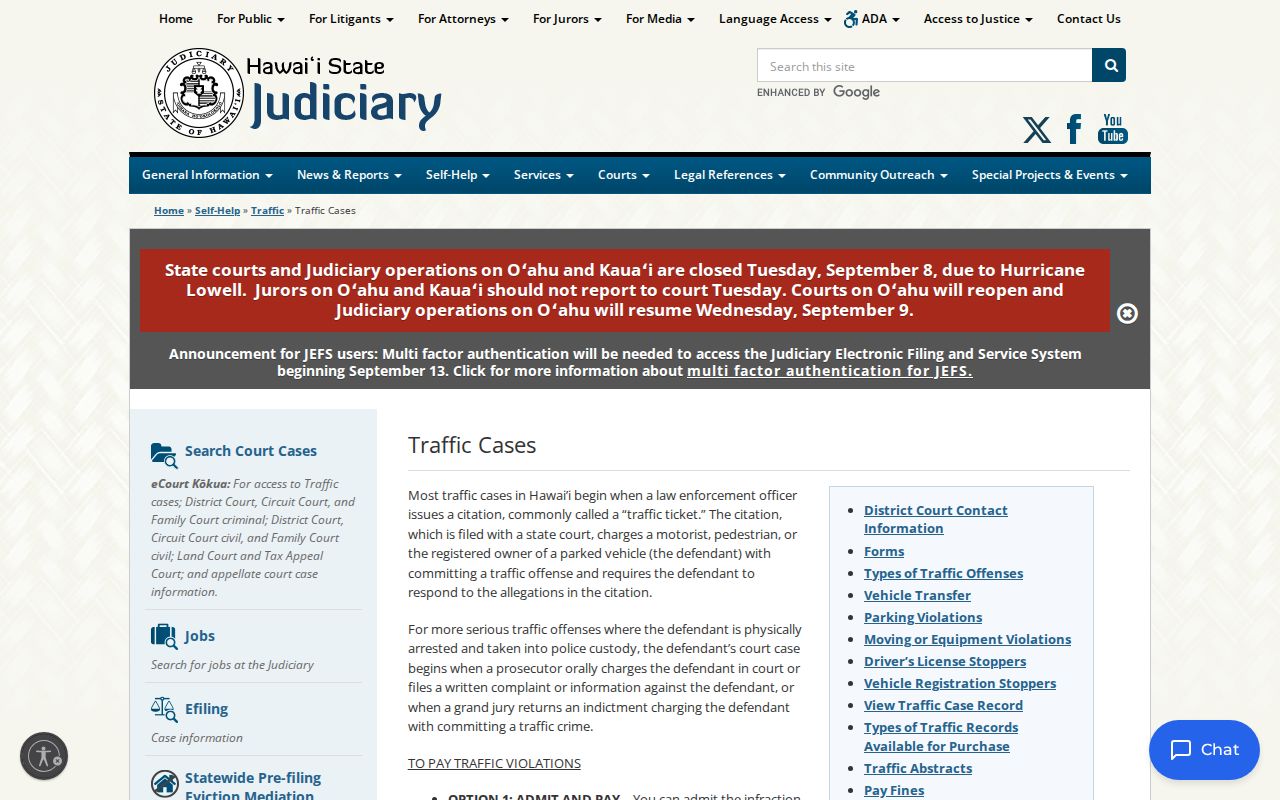
A ticket can take 13 days or longer to reach the system. Online and phone payment covers none of the matters past 21 days, must-appear tickets, cases under a prior court order, or citations not yet entered. A blank payment result in Honolulu County says nothing about warrant status.
- Read the citation for its response and appearance terms.
- Check eCourt Kōkua for the case and later events.
- Call the proper Traffic Violations Bureau when the ticket is late or absent.
- Confirm any new appearance date and warrant recall with the clerk.
Honolulu County Traffic Warrant Checks
Begin with eCourt Kōkua if you have a case number. Check the location, case type, status, events, docket, offenses, and the bail or bond panel. A name match alone proves nothing about identity, and eCourt is a case-information service rather than a complete active-warrant list. The better move is calling the court that holds the matter. Honolulu TVB sits at 1111 Alakea Street and lists (808) 538-5500, with a traffic line at (808) 538-5555. Rural District Court contacts are ʻEwa–Pearl City at (808) 534-6900, Kāneʻohe at (808) 534-6300, Wahiawā at (808) 534-6200, and Waiʻanae/Kapolei at (808) 954-8575. A clerk at the counter can also check for you during posted hours. For HPD service questions, Records and Identification lists (808) 723-3258.
Honolulu County eTraffic Warrant Limits
eTraffic is the official payment route for eligible Honolulu County citations. It asks for your citation number, plate, and card details. It cannot confirm an arrest warrant. When payment is unavailable, the case may be too new, too late, must-appear, or under a court order. Call the clerk instead of guessing.
Key point: A failed eTraffic payment attempt does not prove that a Honolulu County traffic warrant exists or has been cleared.
Mail payment goes in the citation envelope and should never hold cash. In-person service takes the methods the court lists. Phone payment uses the official state number plus ticket data. Each route settles only eligible Honolulu County payment matters.
Traffic Warrants: What They Show
Trust the official case entry, not a guessed local warrant-number format. Before relying on any Honolulu County result, match the court, citation, offense, dates, and events.
| Case or citation ID | The identifier printed by the court or citation. |
|---|---|
| Court | Honolulu TVB or the named First Circuit District Court division. |
| Event | FTA, bench warrant, recall, service, judgment, or compliance entry. |
| Status | Case status and separate warrant-related docket events. |
| Financial terms | Case-specific assessments, appearance bond, or bail data. |
FTA stands for failed to appear. In Honolulu County it marks an event, while the bench warrant is the court order that may follow.
Honolulu County Traffic Warrant Cases
The official violation-types page separates traffic crimes from infractions.
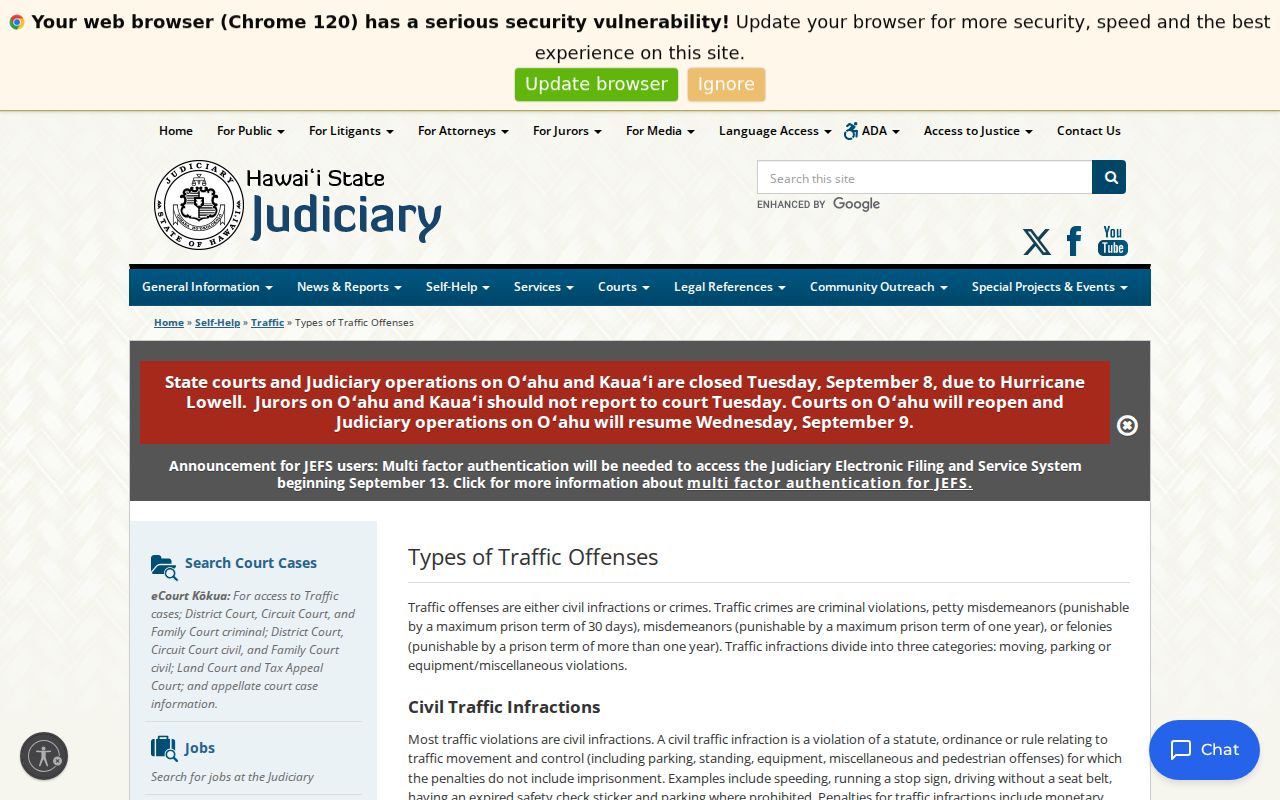
A Honolulu County traffic crime requires a court appearance and may support a public-defender request for those who qualify. A moving infraction generally follows the 21-day response process. Parking can end in a default judgment, though failure to appear on a parking crime can still bring a bench warrant. The precise docket decides which route applies.
| Matter | Initial route | Missed obligation |
|---|---|---|
| Moving infraction | Respond within 21 days | Default or later court action |
| Traffic crime | Appear as directed | Bench-warrant risk |
| Parking judgment | Pay or seek set-aside | Registration stopper may apply |
Clearing a Honolulu County Traffic Warrant
Ask the issuing court what the current docket requires. The answer may involve payment, compliance, a hearing, an appearance bond, or a motion. A motion to set aside a default is a request for judicial action, not an automatic recall. Within 90 days, the driver-stopper guidance describes a motion plus a cash appearance bond equal to the total assessments; later requests need exceptional circumstances.
- Confirm the court, citation, warrant event, and exact amount.
- Ask whether payment, an appearance, bond, or a motion is required.
- File or appear through the court’s stated process.
- Obtain the order and verify the docket changed.
Warning: Do not assume payment alone recalls a traffic warrant; confirm the signed court action and any remaining stopper.
How Traffic Warrants Trigger License Holds
A driver-license stopper is a block tied to failure to respond, appear, or comply. It is not itself a warrant. A registration stopper can follow an unpaid parking judgment and block renewal. A Honolulu County case may hold both a stopper and a bench-warrant event. The Judiciary driver-stopper page lays out the triggers and the set-aside procedures the Judiciary follows.
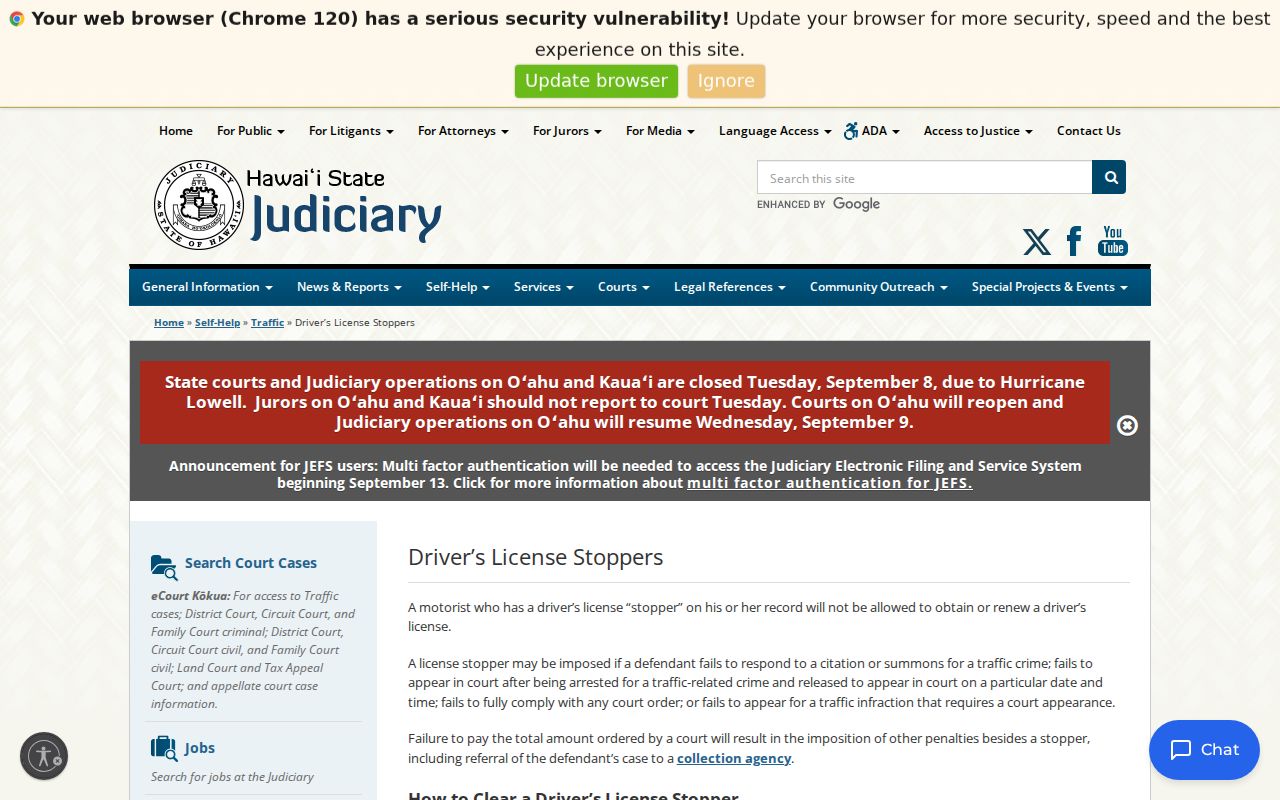
The court lifts a stopper after the required payment, compliance, or approved process. Confirm both the stopper and warrant entries in Honolulu County rather than treating one as the other.
| Mechanism | Trigger | Effect |
|---|---|---|
| Traffic warrant | Missed required appearance | Authorizes arrest |
| FTA | Failure to appear | Recorded event and possible warrant process |
| License stopper | Failure to respond, appear, or comply | Blocks issuance or renewal |
| Registration stopper | Unpaid parking judgment | Blocks vehicle registration renewal |
Rural Honolulu County Traffic Warrant Access
Honolulu County runs more than one counter. First Circuit District Court divisions cover downtown Honolulu, ʻEwa–Pearl City, Kāneʻohe, Wahiawā, and Waiʻanae/Kapolei, so use the division printed on your citation or docket. Current court pages generally list weekday counter hours and advise arriving early, because recalls, bail, and bond service can take added time. Community Outreach Court is another option for eligible people experiencing homelessness or at risk of it, handling nonviolent, nonfelony quality-of-life cases. Traffic violations and license stoppers are among the listed examples. Participation is voluntary, in person, and requires program eligibility and referral. It is not a blanket traffic-warrant amnesty for Honolulu County.
Honolulu County Traffic Warrant Scam Check
A sudden demand for instant electronic payment is a scam signal, not a warrant confirmation. Honolulu County residents get these calls often. HPD and the Judiciary both issue alerts about them. The caller claims you missed jury duty and now have an active warrant, then pushes gift cards, cryptocurrency, wire transfers, Cash App, or Venmo. Hang up. Look up the court's number yourself instead of trusting anything the caller gives you. Never use a link, kiosk, or callback number supplied during the call.
For a real traffic warrant question in Honolulu County, confirm the case with the issuing Traffic Violations Bureau or the District Court division handling it. HPD can release only limited agency information. Broader search routes appear in the Honolulu County warrant check. A legitimate clerk will explain accepted filing and payment methods without pressuring an instant transfer, so ask about those directly rather than guessing.
Write down the official number you dialed, the court division, the case identifier, and the clerk's instructions. If a hearing or motion is required, ask how notice will arrive and where the resulting order will appear. Do not send identity documents through an unapproved channel.
Calling about a relative changes things. Disclosure may be limited without legal authority, and that limit alone does not prove a warrant exists. The named person or their counsel is best placed to request protected details, confirm bail terms, and plan an appearance. If safety is urgent, call emergency services rather than trying to settle a Honolulu County record with an unknown caller.
Keep every receipt, motion, and signed order from your Honolulu County traffic warrant case for later status checks with the court clerk.